Before placing a first jump starter order, brand buyers need to answer several questions: Which user groups will the products serve? In which situations will they use them? Which features will influence their purchase decisions?
Clear answers make it easier to choose the first models, prepare product information and decide what needs validation. Start with existing user input, your target channels and feedback on comparable products, then turn those needs into specific selection requirements.
“People who own a vehicle” is not yet a clearly defined audience for product selection.
A household buying emergency equipment to keep in a vehicle, a driver who regularly tops up tire pressure, and a repair or roadside service professional may face different situations. For your first selection, identify a main user group, then check its vehicles, frequency of use and operating habits.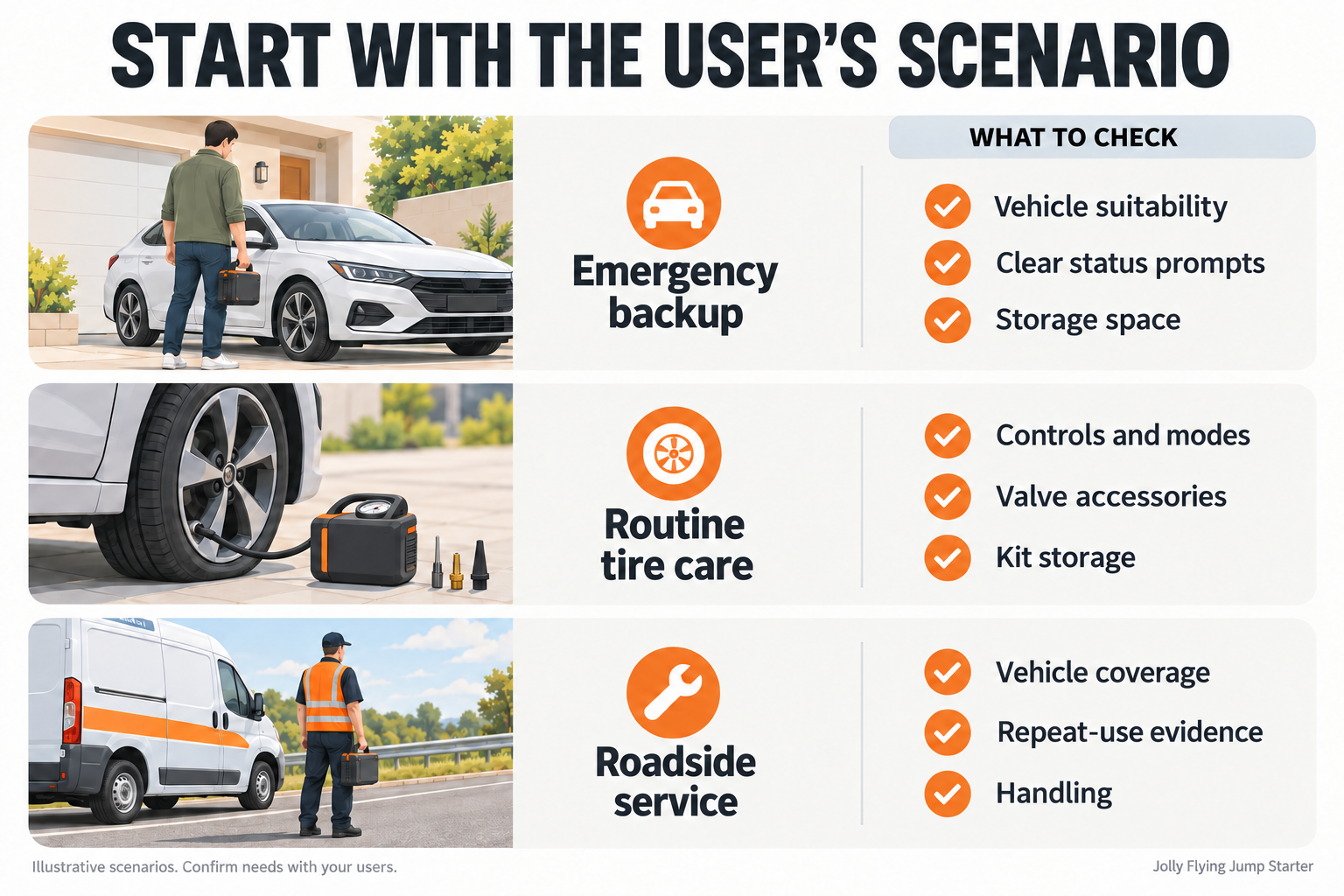
Illustrative user scenarios: identify the intended users, then check the corresponding product requirements. Confirm specific preferences through conversations with users and feedback from use.
When speaking with users or channel partners, ask:
These questions help distinguish needs users have already encountered, concerns before purchase, and interests that still need validation.
“Screen status information,” “multiple functions” and “portability” can be clues to selling points. The next step is to clarify which problems they address.
| What users say matters | What to check during selection |
|---|---|
| A clear display | Whether first-time users, including older adults, can identify battery level, readiness and prompts, and whether they need to keep referring to the manual |
| Easy to carry in the vehicle | Whether the unit, clamps and accessories together fit the intended storage space |
| Multiple uses in one device | Which situations users have actually encountered recently, and whether the additional size, price and operating requirements are acceptable |
| Able to start their vehicle | Whether the target vehicles match the product's intended applications, and whether performance claims have clear conditions and test evidence |
Organize existing user feedback, channel conversations and reviews of comparable products under “purchase reasons,” “purchase concerns” and “issues during use.” Record the source and number of mentions, and look for patterns within the same user group or application.
For example, if storage concerns recur in the feedback you collect, check how the complete kit is stored when reviewing samples. Use preferences that actually appear in your sample as selection clues for that group of users.
Suppose your target users need emergency equipment for 12V vehicles and also have a routine need to top up tire pressure. A combined jump starter and air compressor is worth including in the comparison.
Evaluate it through three questions:
CS02-Basic, as described in its product materials, combines 12V jump starting and inflation in one unit and can serve as a reference for this type of selection. Check it against the target vehicles, required valve adapters, display prompts and operating method.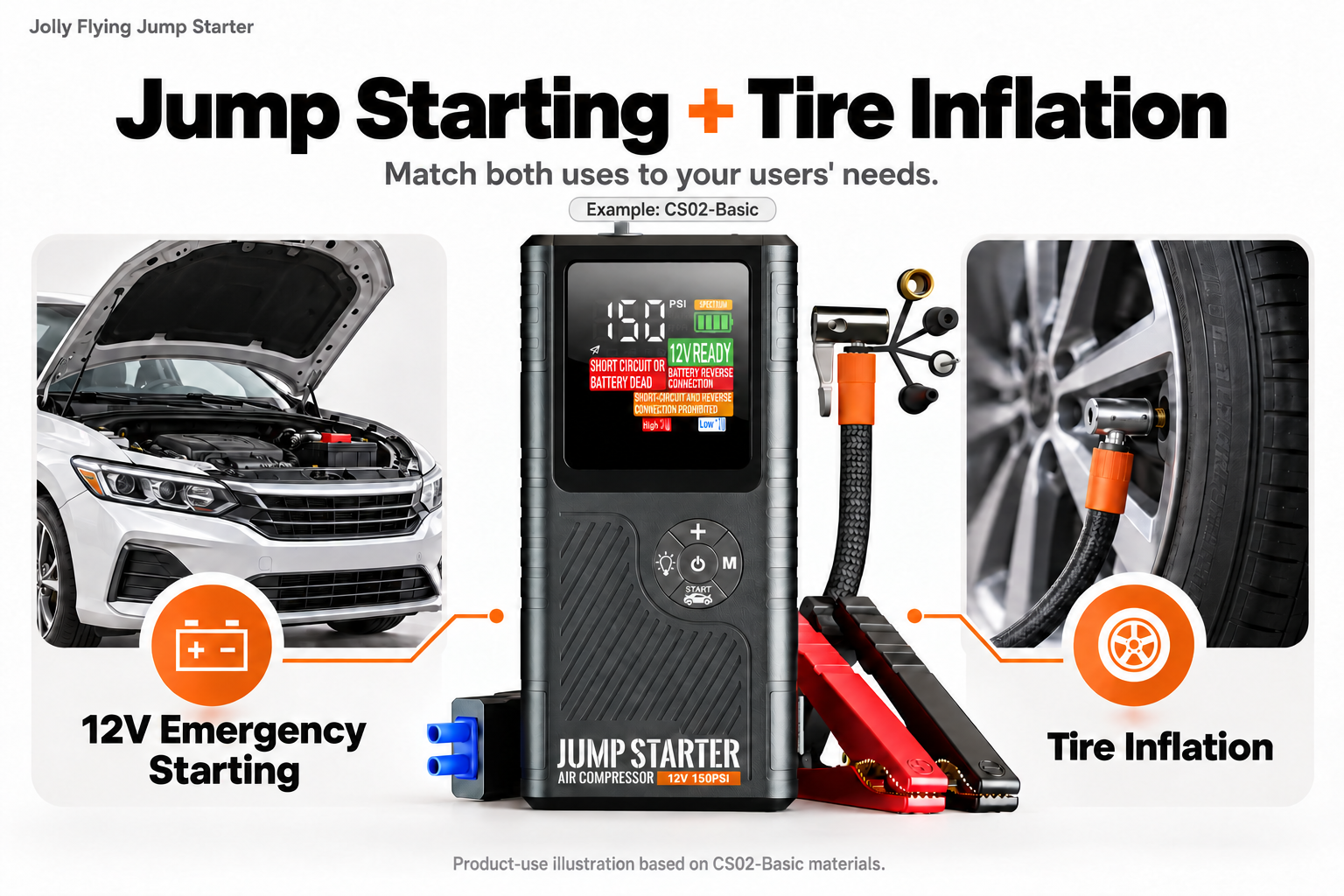
An example of combined starting and inflation uses. Product selection should reflect the target users' actual need for both functions.*
The purchasing rationale for a combined design should be explainable through specific user situations.
Sales and usage feedback from the first batch can help you adjust models, configurations and product information for the next purchase. Keep information from both before purchase and after use.
| What to record | What it helps you assess |
|---|---|
| User type, target vehicle and main application | Whether the users who purchased match your original target group |
| Units sold, selling price, sales channel and presentation | The sales conditions under which the results were obtained |
| Main reasons for purchasing or declining | Which concerns need clearer product information, and which involve model choice or price positioning |
| Functions actually used and issues encountered | Which functions are used, and which operating steps or explanations need further review |
Record users' own words separately from your interpretation.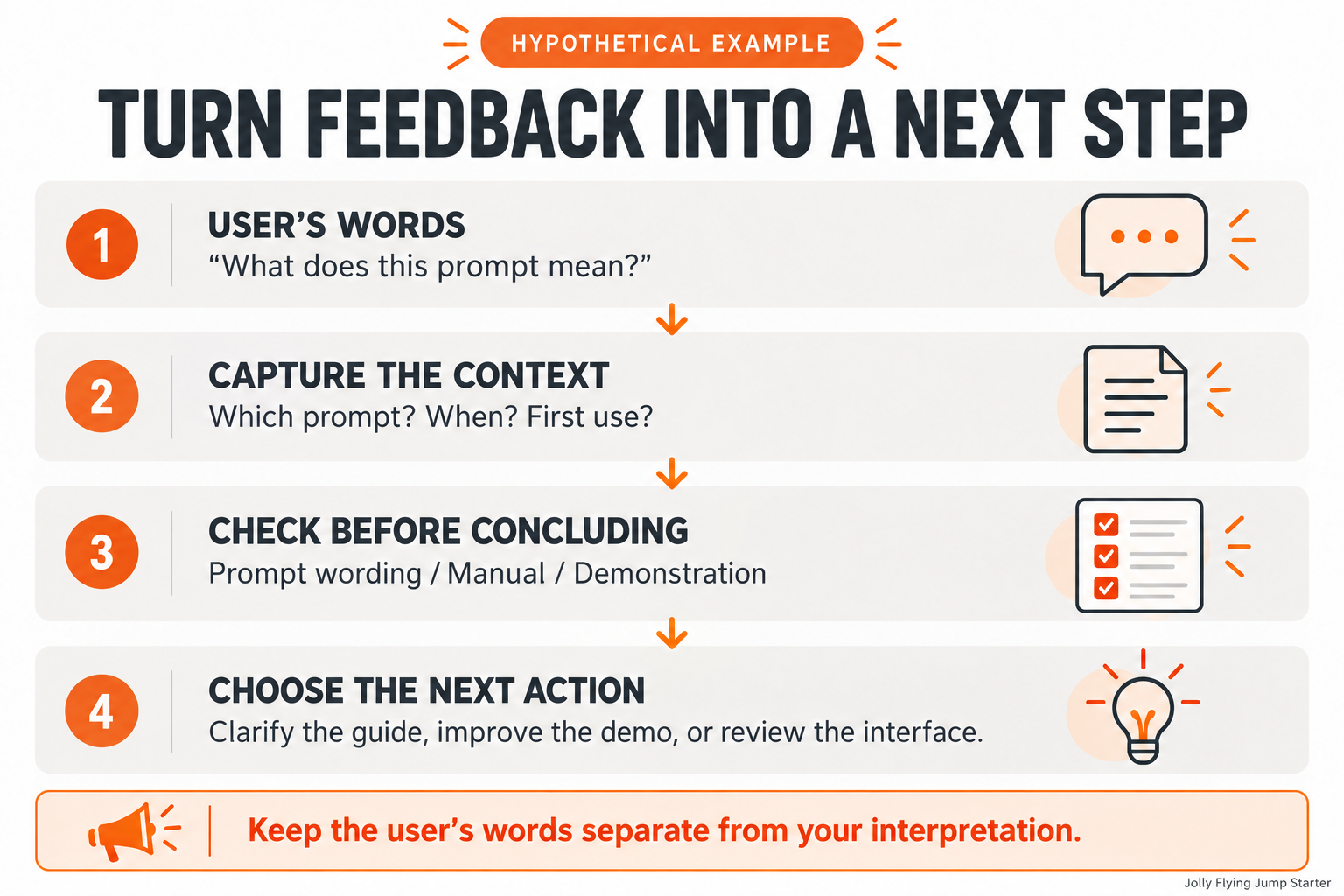
Hypothetical feedback-record example: preserve the user's words, add the specific context, then check possible causes and plan the next action.
For example, if a user says, “I don't understand the prompts on the screen,” record which prompt and the situation in which the question arose. Then review the instructions, demonstration and interface wording before attributing the issue to screen size.
When comparing models, also record the channel, selling price, presentation and promotional conditions. Review these alongside the feedback to make better-informed replenishment and adjustment decisions.
Before requesting a quotation, set out:
Use this checklist to discuss models, quantities, packaging and budget. It gives your purchasing plan a specific basis in user needs and identifies what to continue validating.
For reference, Jolly Flying Jump Starter's standard products start at 20 units per model. Custom logos and custom printed boxes each start at 500 units per model. Mixed-model trial orders and small orders from available stock can also be discussed. Confirm specific combinations, availability and costs when requesting a quotation.
