The jump starter is connected to your truck's battery, you've selected a voltage mode, and an indicator is on. Yet the engine does not respond. There are two things to check. Does the selected starting voltage match the vehicle? Has the jump starter detected the battery and entered its ready state?
Some devices communicate this information through the position, color or flashing pattern of their indicators. If you only notice that a light is on, you may miss the voltage mode or a prompt that needs attention. When starting is difficult, begin by checking voltage matching and battery detection.
Suppose you are using a jump starter with manual voltage selection. The vehicle has a 12V system, but the unit is set to 24V. Depending on its design, the device may report an error or restrict output. If the higher voltage reaches the vehicle, it can damage the battery or vehicle electronics. Compare the vehicle manual's requirements with the selected mode before enabling starting output. Ford Super Duty owner's manual
A device with automatic voltage detection can help identify the system voltage when connected to the vehicle battery. Displaying the result gives you a visible way to cross-check it. For a vehicle that requires 24V, look for the corresponding 24V READY indication.
Automatic detection relies on electrical information available at the connection point. As a deeply discharged battery's terminal voltage falls, the conditions for detection also change. Confirm the actual system voltage from the vehicle manual, then follow the device's prompts.
Suppose a 24V truck has been parked and its battery is severely discharged, with a voltage too low for normal detection. You have confirmed the system voltage, connection points and polarity, but the jump starter still has not entered its normal ready state.
The battery voltage may be below the device's normal detection range. Automatic detection needs sufficient input information, and very low terminal voltage may cause the device to keep starting output disabled. Check the model's manual for its detection range and the appropriate procedure.
Force Start provides a manual output option for the low-voltage detection conditions allowed by the product manual. Before using it, confirm the vehicle's actual system voltage, connection polarity, battery condition and the model's Force Start requirements. Then follow the specified procedure.
Deep discharge and battery damage require different handling. If a battery is swollen, leaking, frozen or suspected of having an internal short circuit, arrange for it to be checked first. Confirm the conditions for Force Start use in the model's manual.
Once normal output is enabled, the jump starter joins the vehicle battery's starting circuit to provide additional current to the starter motor. Clamp contact and vehicle wiring also affect cranking performance. The illustration below shows this circuit and the voltage drop that can occur when connection resistance is high. Delco Remy starting system diagnostics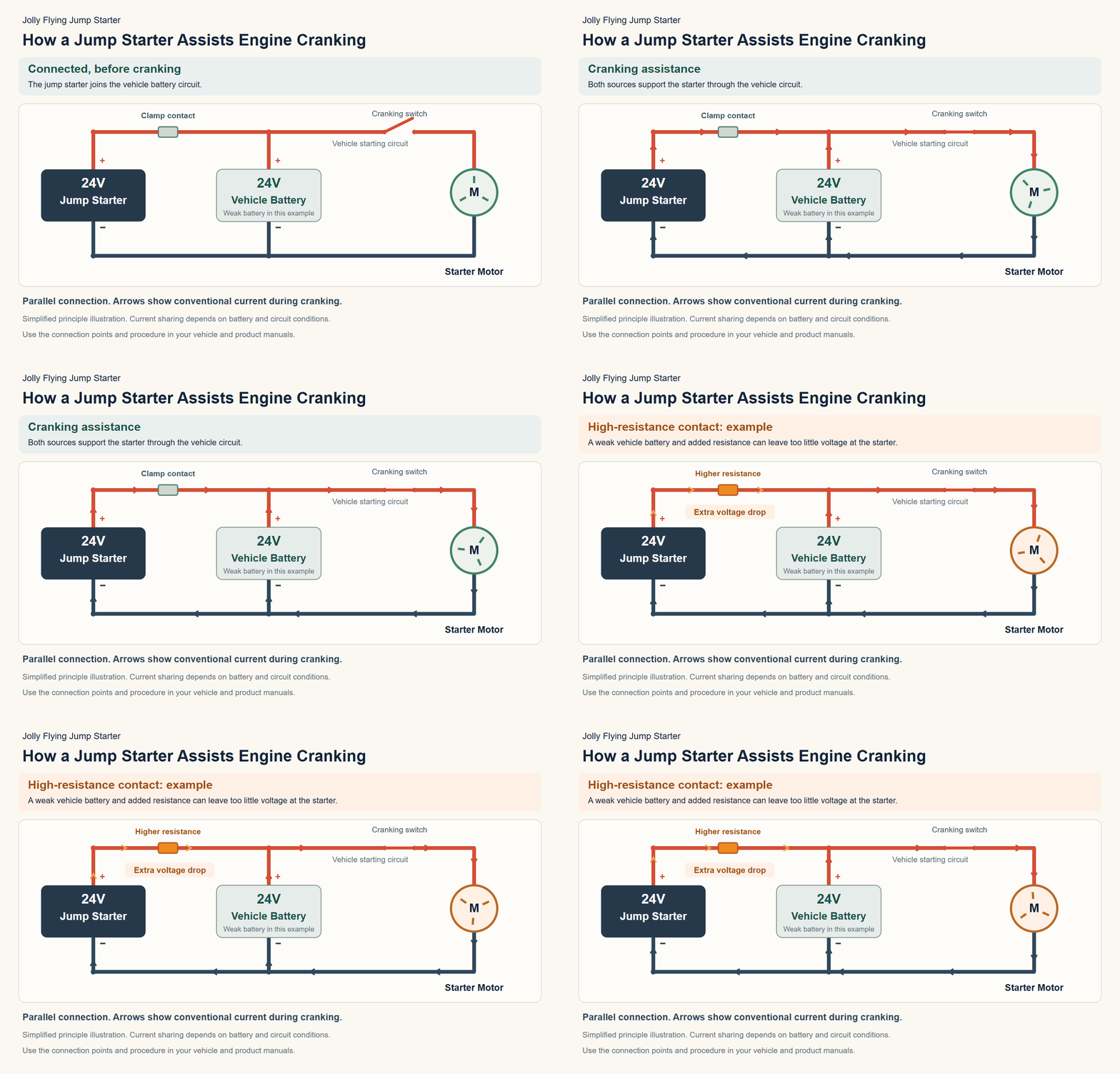
The J50 from Jolly Flying Jump Starter offers automatic 12V/24V voltage detection and uses 12V READY / 24V READY indications to show the corresponding ready state. After connecting the unit, users can check the voltage readiness indication, battery level and warning prompts against the vehicle's requirements.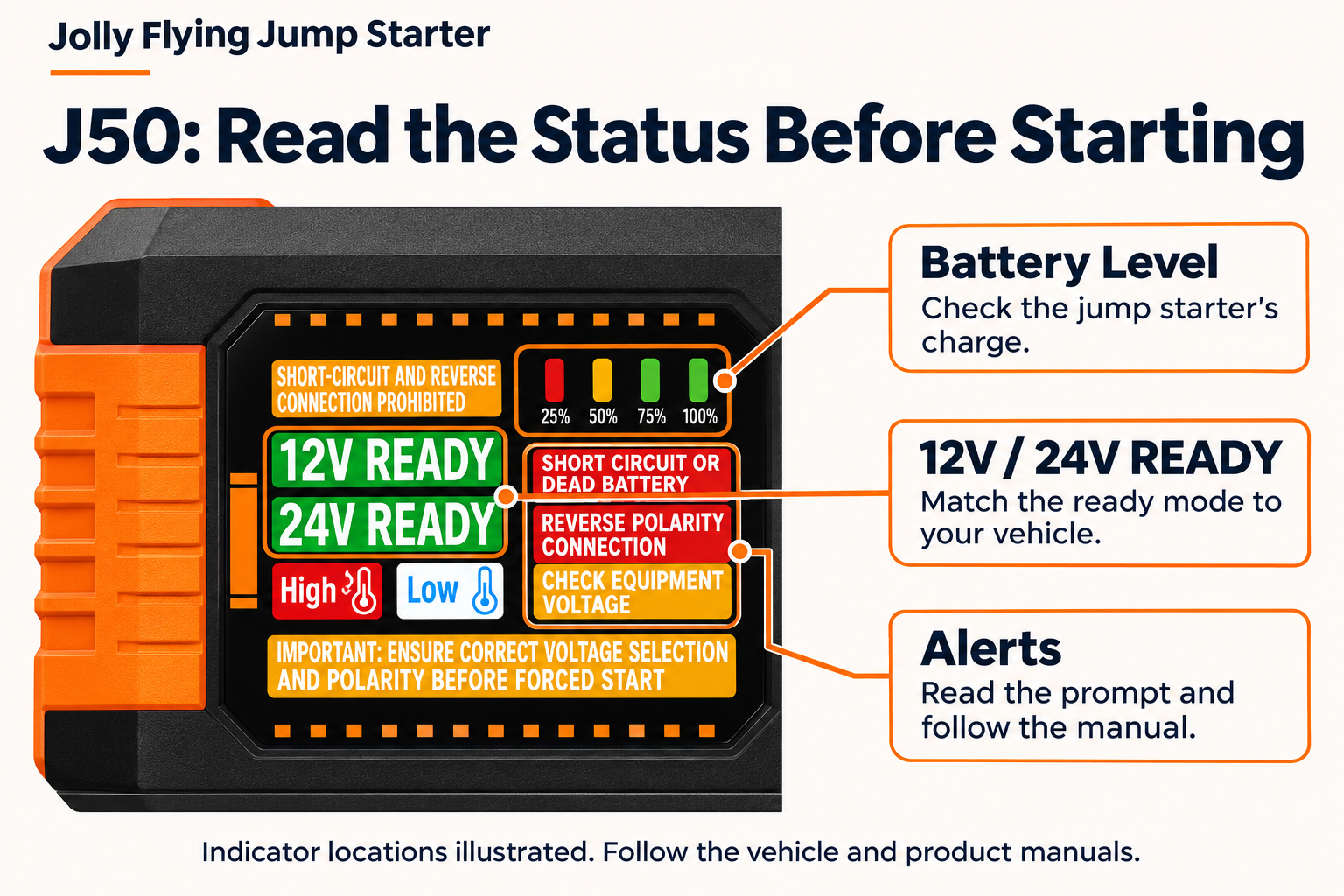
Each feature supports a particular part of the process.
| Feature | How to use the information |
|---|---|
| Automatic 12V/24V detection | Helps identify system voltage after connection to the vehicle battery. Confirm compatibility with the vehicle manual. |
| Visible 12V READY / 24V READY indications | Check that the corresponding mode is ready before starting, and compare the displayed state with the vehicle's requirements. |
| Battery level and alert display | Check the unit's charge and read any warning prompt before following the manual's instructions. |
| Force Start | For deep-discharge conditions that prevent normal detection and are covered by the manual, confirm voltage, polarity and battery condition before using the specified procedure. |
For normal use, let the unit perform detection, then check READY and any alerts. If excessive discharge prevents normal readiness, use the vehicle information and J50 manual to determine whether Force Start is appropriate. This gives drivers guidance for both normal use and the special low-voltage conditions covered by the manual. J50 automatic voltage detection product information
If you use a jump starter across 12V and 24V vehicles, prioritize automatic voltage detection, clear visual status prompts and a Force Start function with defined conditions for use.
Automatic detection helps identify voltage, the display lets you check readiness, and Force Start offers an additional option for eligible deep-discharge situations. Together, they help reduce guesswork and make on-site operation more straightforward.
J50 combines these capabilities in one unit. Compare its functions and operating guidance with your vehicle and the situations in which you plan to use it. Explore Jolly Flying Jump Starter J50
