Two Chevrolet Silverado 2500HD pickups can have the same 6.6L V8 displacement, yet one runs on gasoline and the other has a Duramax diesel. Before buying a jump starter for either truck, identify the engine and look for starting data that covers that configuration. A diesel starter motor typically has to overcome higher compression. Actual current draw also depends on starter design, oil viscosity and starting temperature. Chevrolet Silverado HD specifications · HELLA starter technical guide
When the starter motor first engages, it draws a brief surge of current. As the starter turns the crankshaft, current rises and falls with each cylinder's compression stroke. Here, cranking current means the current drawn after that initial surge and before the engine runs on its own. On a waveform, look at the average or the range of fluctuations over that interval. RWTH Aachen University study of starting current, Appendix A.2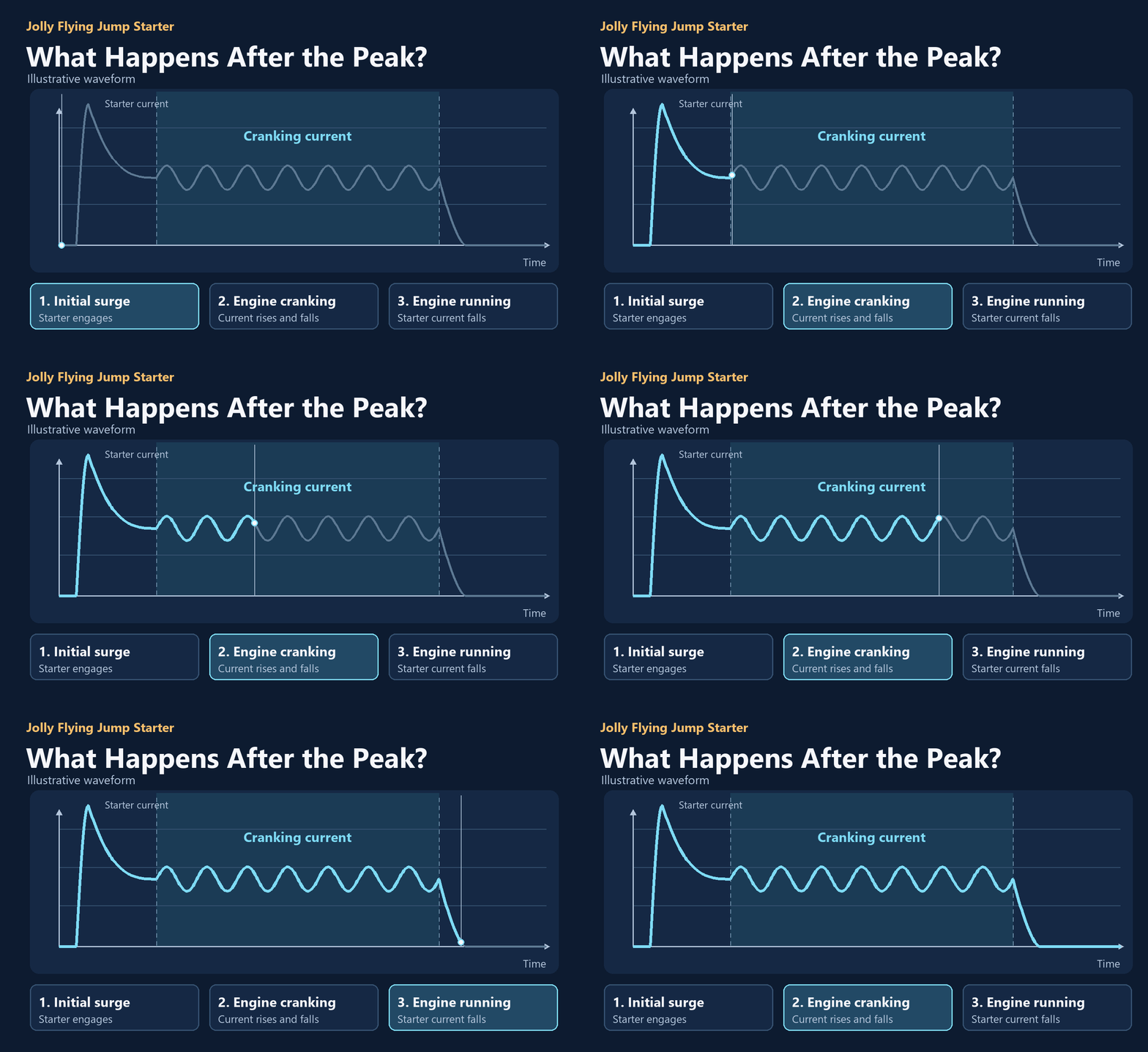
Figure 1. Schematic of starter motor current. The blue area marks the cranking interval. The curve and axes illustrate how current changes.
| Vehicle category | Published current reference or vehicle configuration | How to use it |
|---|---|---|
| Personal use, small gasoline passenger cars | Pico's gasoline engine diagnostic guide gives about 100–300 A as a general cranking reference. A successful start of a gasoline VW Polo at room temperature also shows current fluctuations after the initial surge. | Read the range in the context of the diagnostic conditions. Use the Polo waveform to identify the cranking interval. Pico diagnostic guide, p. 9 · VW Polo starting waveform, Appendix A.2, Fig. 1 |
| Personal use, diesel passenger cars | A diagnostic trace from a 1.9L diesel Opel Astra H shows about 278 A at the starter, with 10.7 V battery voltage and an oil temperature of 24°C. | This reading comes from a single diagnostic test and gives an example of current in the hundreds of amps. Opel Astra H test, Fig. 1 |
| Personal use, SUVs and heavy-duty pickups | The 2025 gasoline Toyota RAV4 has a 2.5L four-cylinder engine. The Chevrolet Silverado 2500HD is available with a 6.6L gasoline or 6.6L diesel engine. | Identify the model year, fuel type and engine configuration, then look up starting current and jump starter compatibility for that version. Toyota RAV4 specifications · Chevrolet Silverado HD specifications |
| Commercial use, U.S. heavy-duty tractors | In a specific starting circuit diagnostic procedure, Freightliner cites 400–1,000 A as a reference for current in the starter cable. The bulletin lists the Cascadia among the models it covers. | This range is for service diagnostics. To assess a Cascadia with the DD13 engine, look for measurements from that configuration under comparable conditions. Freightliner Service Bulletin 54-278 |
| Commercial use, European heavy-duty tractors | A specification sheet for the Actros L 1845 LS lists a 12.8L OM471 diesel engine and two 12 V, 220 Ah batteries. | Each battery label describes one battery. Check the vehicle manual for the specified jump-start voltage, then look up starting current for that configuration. Mercedes-Benz technical specifications |
Start with the battery label. Amp-hours (Ah) describe battery capacity. Cold cranking amps (CCA) rate the battery's ability to deliver current under specified cold test conditions. For example, the Battery Council International (BCI) definition for a 12 V lead-acid battery uses about −18°C for 30 seconds and requires the battery to maintain at least 7.2 V at its terminals. Read each rating against the standard used. Before choosing a jump starter, note the voltage, CCA and test standard on the label and check whether the figures apply to one battery or the whole bank. Interstate Batteries glossary
The diesel Silverado 2500HD provides a concrete example. GM's battery reference for model years 2016–2018 lists 770 CCA batteries for some HD diesel configurations and identifies the auxiliary battery for those configurations as the same specification as the main battery. Take two matching 12 V, 770 CCA batteries:
These examples show how wiring affects the ratings of a battery bank. For your Silverado, check the model year, factory configuration and installed battery labels. State of charge, age, temperature and wiring condition all affect actual output. GM TechLink battery reference for model years 2016–2018 · Interstate Batteries glossary on series and parallel circuits
Check heavy-duty trucks by configuration, too. The Freightliner Cascadia's 12.8L Detroit DD13 and the Mercedes-Benz Actros L 1845 LS's 12.8L OM471 have the same displacement. Verify the starting system for each truck. The Actros specification sheet lists two 12 V, 220 Ah batteries. The 220 Ah figure describes each battery's capacity. To find the bank's CCA, check the battery specifications and wiring. As one European truck example, a historical Volvo Trucks specification lists 800 A, 1,000 A and 1,150 A of cold-starting capacity at −18°C for its 140 Ah, 170 Ah and 225 Ah two-battery options, respectively. Check which option your truck actually has. Detroit DD13 specifications · Mercedes-Benz technical specifications · Volvo Trucks battery options
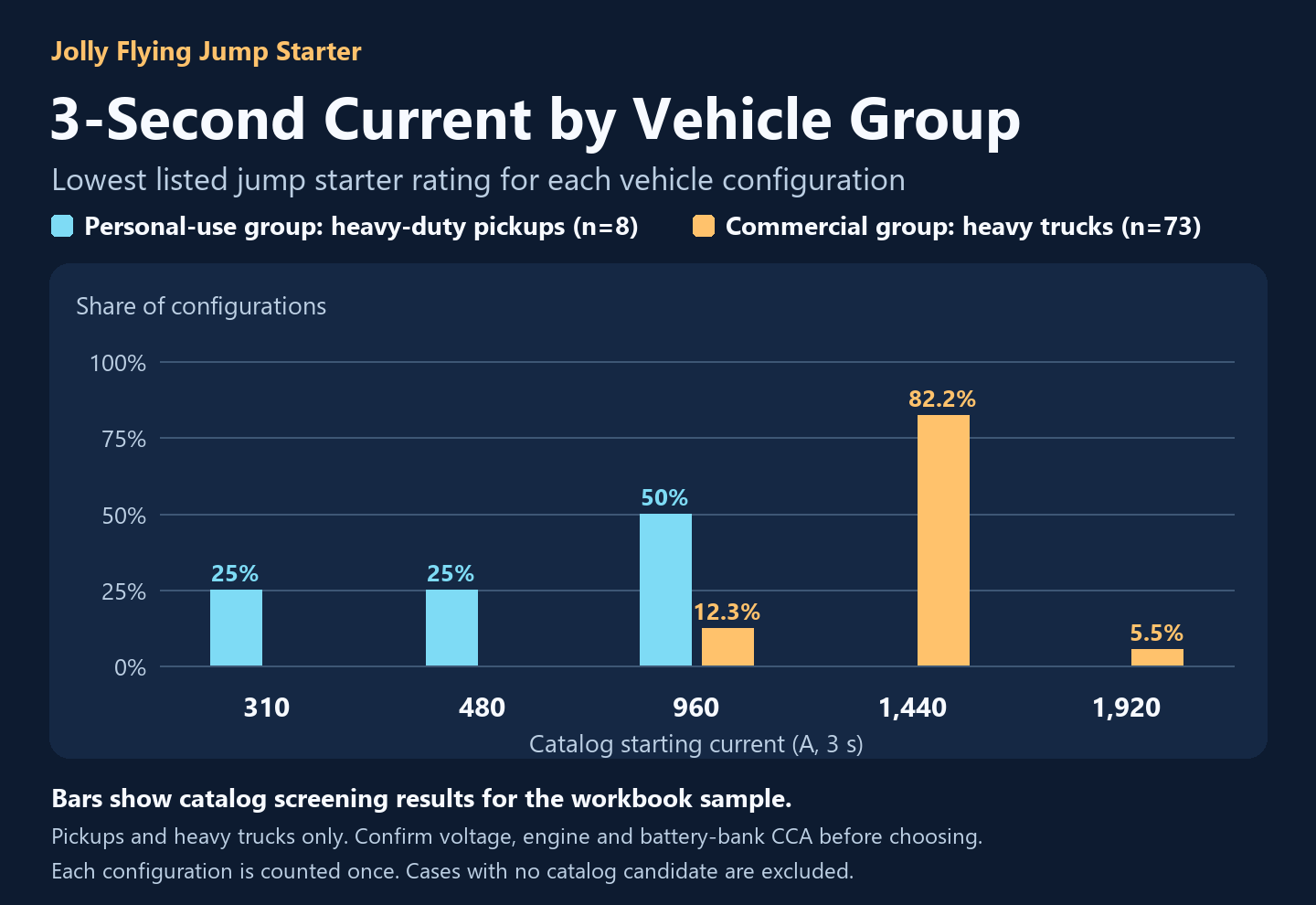
Figure 2. Candidate jump starter catalog ratings by vehicle group. Each engine configuration is counted once and assigned the lowest three-second starting current among its listed candidates. The sample covers eight personal-use heavy-duty pickup configurations and 73 commercial heavy-duty truck configurations. Each bar shows a share within its group.
In the chart, the lowest catalog candidate ratings for the heavy-duty pickup group fall at 310 A, 480 A and 960 A. For the commercial heavy-duty truck group, 60 of 73 configurations (82.2%) fall at 1,440 A. These figures show how the candidates in the worksheet were distributed after catalog screening. To choose a unit for your vehicle, also check the specified jump-start voltage, engine and battery-bank CCA.
Start by checking what was measured. Starter motor cranking current comes from a test on the vehicle's starter circuit. Battery CCA comes from the battery label or the relevant vehicle specifications. For a jump starter's three-second starting current, check how the manufacturer defines the rating and read it alongside test voltage, temperature and duration. The 400–1,000 A in the Freightliner bulletin, for example, is a range technicians may see at the starter cable during diagnosis. If the vehicle battery can still supply current, it may share the starting load with the external unit. Freightliner Service Bulletin 54-278, p. 7 · PicoDiagnostics measurement manual
Here are three examples from Jolly Flying Jump Starter. The table uses the catalog's three-second starting current and recommended maximum battery CCA for jump-start assistance. The first describes jump starter output. The second helps screen battery compatibility.
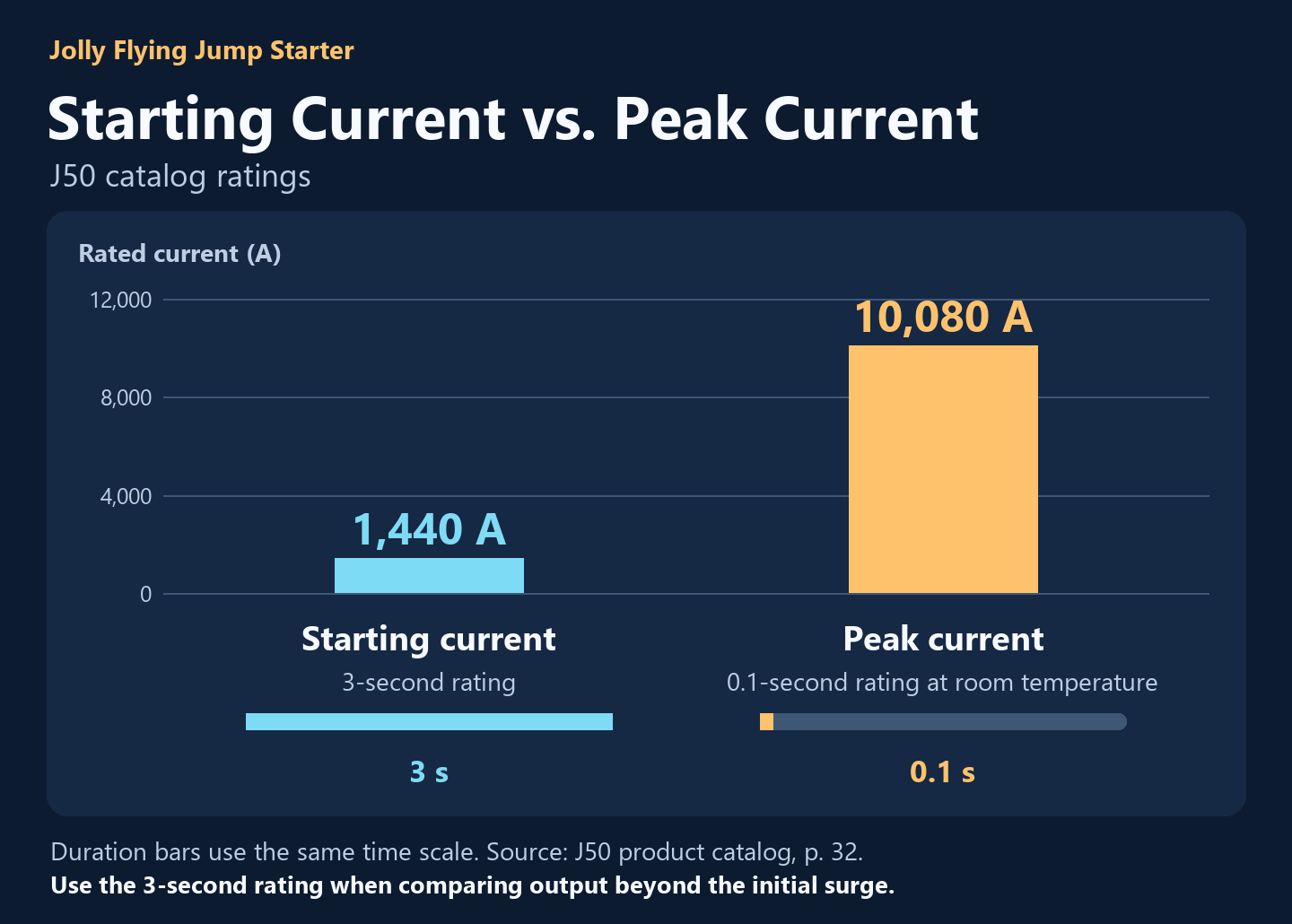
Figure 3. J50 catalog ratings. The columns show current on the same amp scale. The bars beneath them show the respective rating durations. Read current and duration together when comparing short-duration starting output.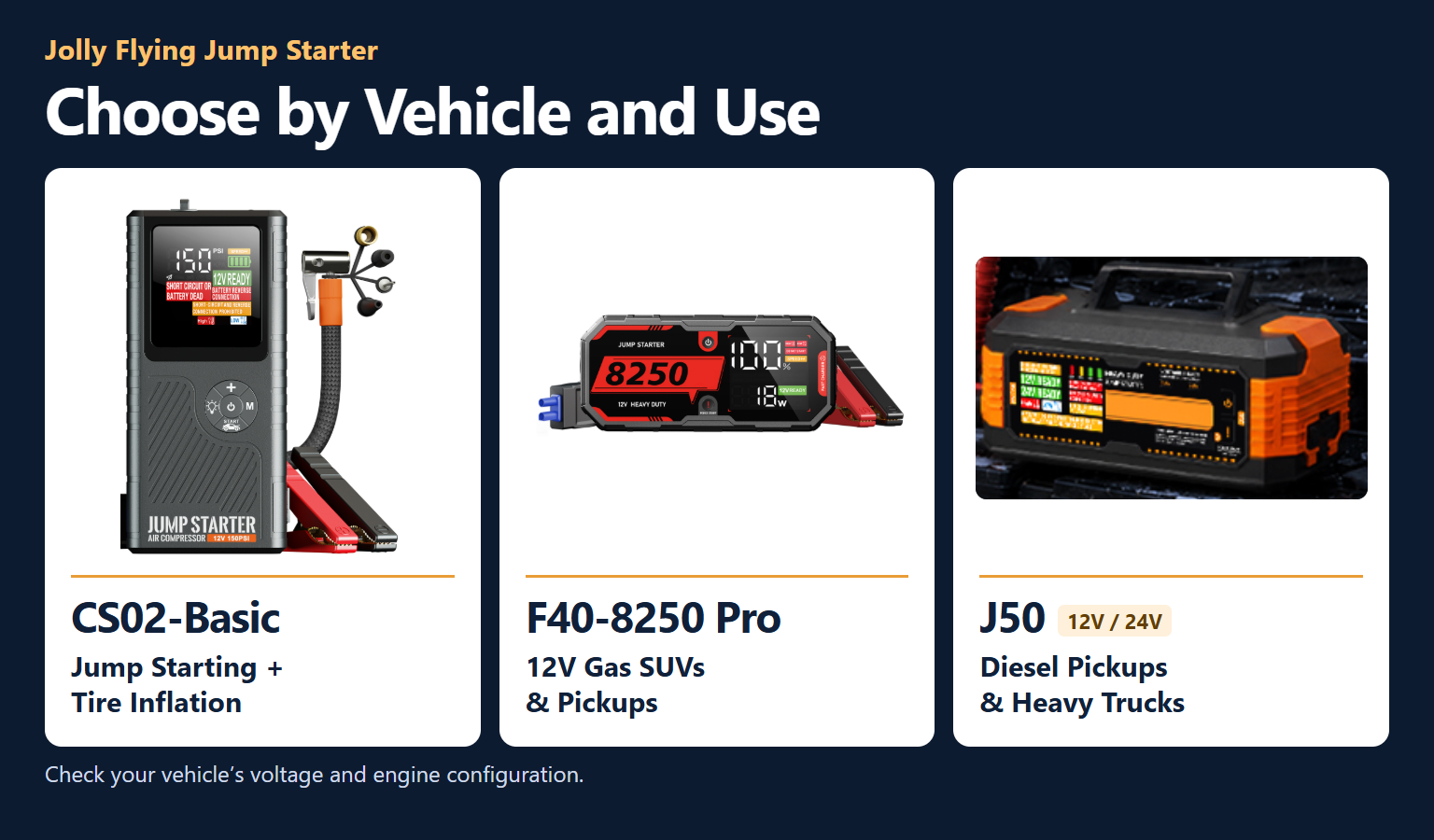
Figure 4. Compare the three models by vehicle and use. For compatibility, check the vehicle's jump-start voltage and engine configuration.
If you drive the 6.6L Duramax diesel Silverado 2500HD from the opening example, use the 6.6L diesel configuration as your first filter. It exceeds the F40-8250 Pro's listed 6.5L diesel limit, so the J50 is a model to check next. View the F40-8250 Pro engine specifications
If you have confirmed that your truck uses the 12 V parallel starting bank from the example, compare its theoretical 1,540 CCA with the J50 catalog's 2,880 CCA compatibility reference and check the applicable conditions for 12 V mode.
Jolly Flying Jump Starter previously used the J50 to help start a Silverado 2500HD 6.6L Duramax and a Freightliner Cascadia DD13 in vehicle tests. These two cases provide a reference for the engine configurations tested.
If you're shopping for a heavy-duty pickup or truck, have the model year, engine, jump-start voltage and winter operating temperatures ready. You can use the Jolly Flying Jump Starter product page to check compatibility. Explore the Jolly Flying Jump Starter J50
