Executive Overview: Fleet Needs Met by JFStarter Commercial Solutions
Fleet managers and procurement teams requiring dependable roadside power will find purpose-built answers in JFStarter’s commercial line. Designed for extensive duty cycles, rugged vehicle installs and enterprise-grade service, our fleet compatibility jump starters combine heavy‑duty amps, telematics options and scalable warranty/after‑sales frameworks so fleets stay moving and insurers stay satisfied.
Executive Overview: Fleet Needs Met by JFStarter Commercial Solutions
Fleet managers and procurement teams requiring dependable roadside power will find purpose-built answers in JFStarter’s commercial line. Designed for extensive duty cycles, rugged vehicle installs and enterprise-grade service, our fleet compatibility jump starters combine heavy‑duty amps, telematics options and scalable warranty/after‑sales frameworks so fleets stay moving and insurers stay satisfied. Request the Fleet Spec Sheet to start a pilot evaluation.
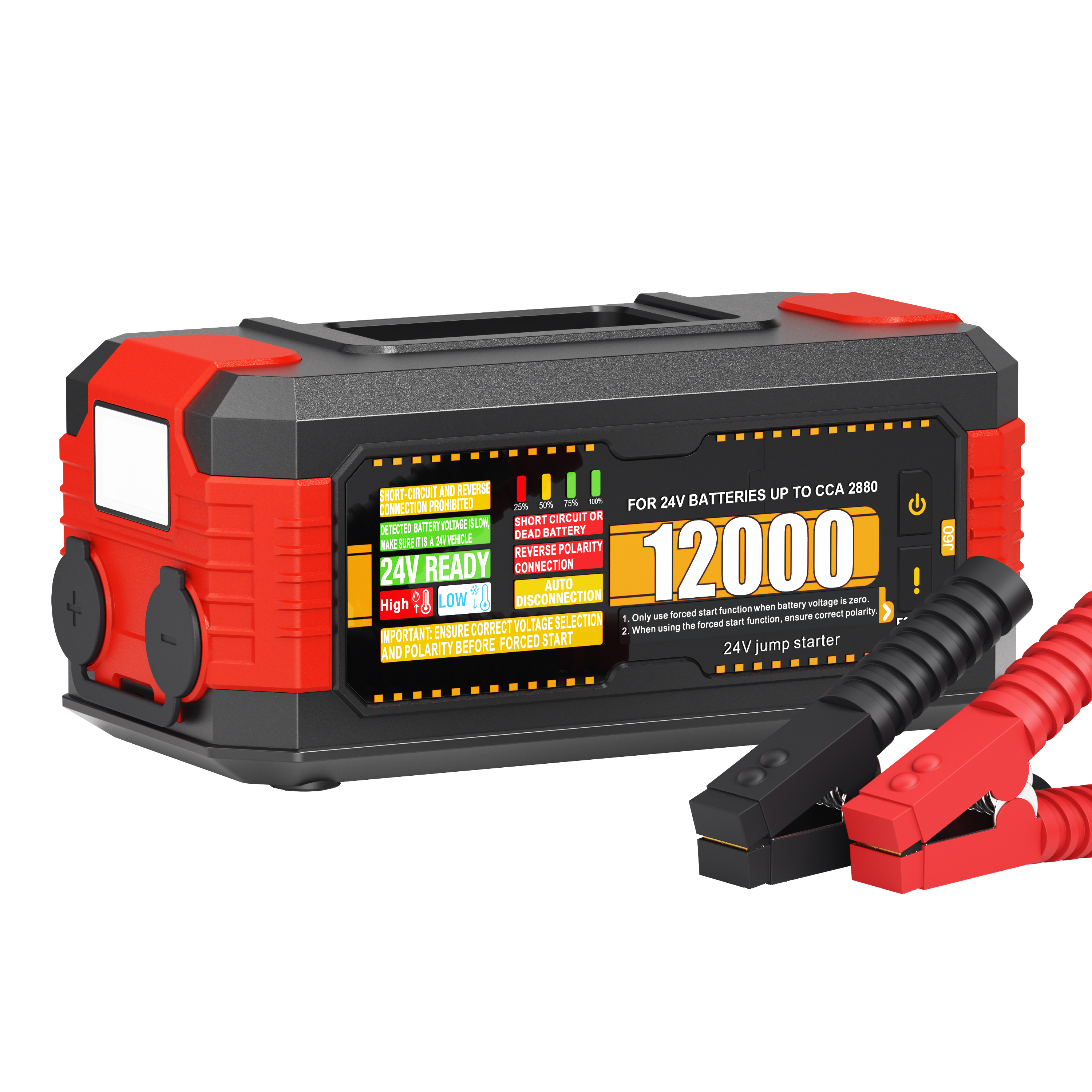
Key Performance Specs for Fleet Use
Fleet operations demand both surge power and repeatability. Typical JFStarter commercial models deliver:
- Peak/Cranking Amps: 1,500–4,000 A peak; 400–1,200 A continuous depending on model.
- Energy & Runtime: 10,000–30,000 mAh (120–360 Wh) pack sizes; charge-to-90% in 60–120 minutes with PD fast charging.
- Cold‑start capability: validated cranking performance at –20 °C to meet regional winter demands.
- Durability: IP54–IP65 ratings, operating range –20 °C to +60 °C, reinforced enclosures for vibration/shock tolerance.
- Present these metrics to your maintenance team; match model selection to vehicle types (vans, medium-duty trucks, buses) and duty patterns (single jump per shift vs. frequent multi-jump service).
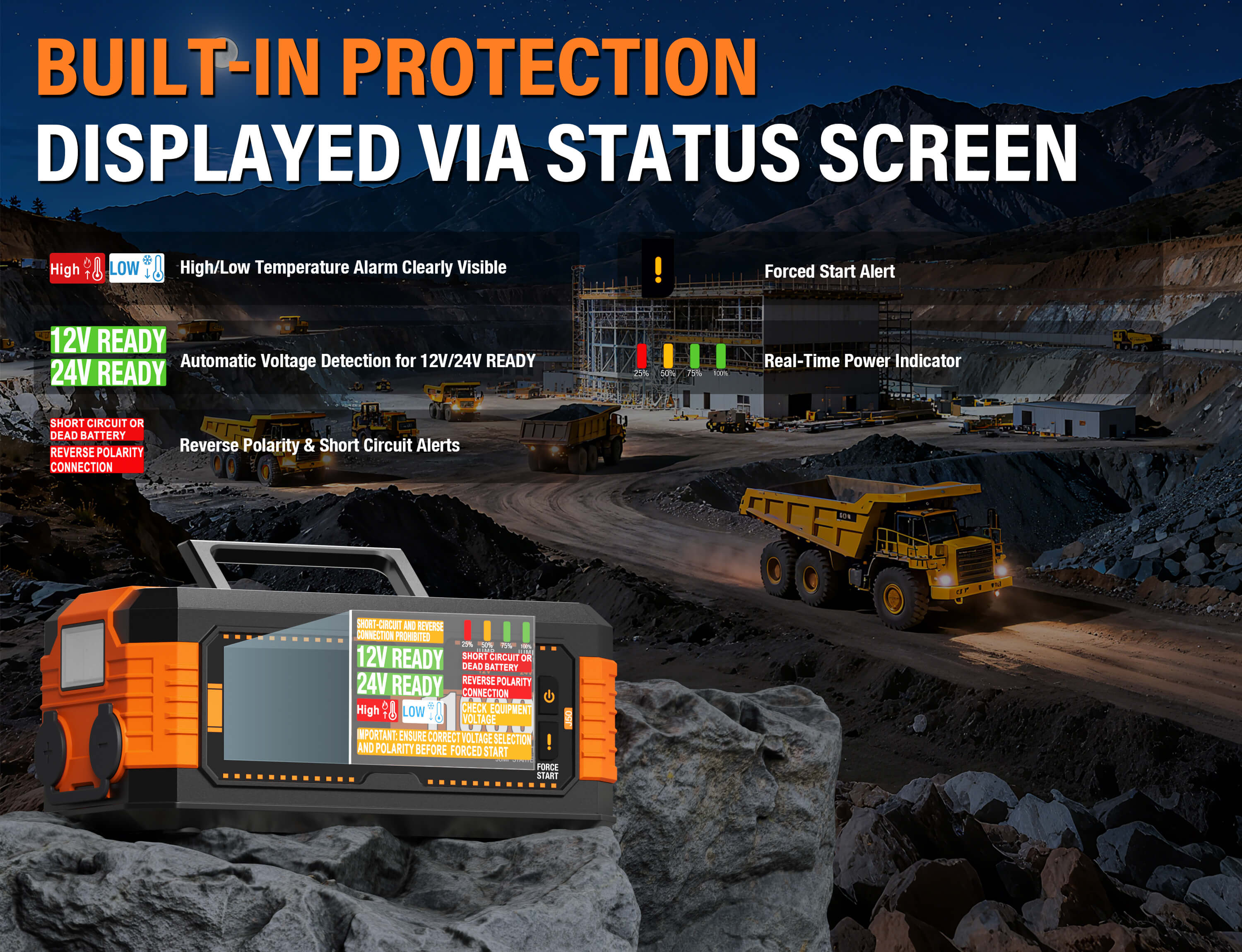
Fleet Compatibility & Integration Options
Fleet compatibility goes beyond raw amps. JFStarter supports multiple integration pathways:
- Telematics & fleet monitoring: optional Bluetooth for short-range status, and LTE/LoRaWAN modules for centralized reporting (charge state, health, usage logs). API endpoints allow push of device telemetry into fleet management systems.
- Mounting & fitment: modular brackets for under‑seat, glovebox or locker installs; dedicated in-vehicle charging hubs for rapid replenishment during breaks.
- Multi‑unit workflows: serialized assets, swap‑and‑charge racks, and central dashboards enable inventory control and traceability across depots.
- These features reduce administrative friction and provide visibility required for large deployments.
Safety, Certifications & Fleet Compliance
Commercial purchasers must insist on export and operational compliance. Each unit intended for fleet use should be accompanied by:
- Transport & cell safety: UN38.3 test reports, MSDS, and IEC/EN 62133 (or equivalent) for cells.
- Product certifications: CE, RoHS; optional UL/TÜV listings on request.
- Audit documentation: batch UN38.3 logs, serial-numbered test reports and traceability records suitable for insurer or regulator review.
- We advise including certification verification clauses in contracts and validating lab names on test documents.
Warranty, Service Levels & After‑Sales Support
A fleet procurement decision hinges on dependable service delivery. Typical JFStarter commercial terms include:
- Base warranty: 12–24 months on electronics and workmanship; optional extension to 36 months for enterprise contracts. Cell coverage and BMS faults explicitly described in SLA.
- SLA tiers: standard RMA turnaround (10–15 business days), expedited replacement (3–5 business days), and on‑site swap programs for critical fleets.
- Service infrastructure: spare parts pools (clamps, chargers), certified repair partners by region, scheduled training for fleet technicians and driver quick‑
- Contract options can include dedicated account management, quarterly health reports and failure-rate thresholds tied to replacement commitments.

QC, Testing & Reliability Data Fleets Expect
Fleet buyers should demand rigorous, fleet-oriented validation:
- Lab & field tests: extended cycle life (≥1,000 cycles with ≤20% capacity loss for lithium chemistries claimed), high duty‑cycle soak tests, vibration/road‑simulation, repeated cold‑start sequences.
- Reporting: MTBF/MTTR estimates, batch failure rates, and serialized sample test logs with photos. Third‑party lab validation (SGS/Intertek/TÜV) strengthens procurement confidence.
- Onboarding pilots: witnessed live cranking tests, video evidence, and destructive sample testing are standard offerings before large rollouts.
OEM/ODM & Scalability for Fleet Programs
When fleets require branding, ruggedization or bespoke integration, OEM/ODM options include:
- Custom hardware: hardened enclosures, vehicle‑specific mounting kits, custom user interface markings.
- Firmware: BMS parameter tuning, custom charge profiles, and integration hooks for telematics platforms.
- Volume & production: MOQs typically 300–2,000 units for branded SKUs; dedicated production lines and ramp schedules available for larger programs with price stability clauses built into multi‑year supply agreements.
- Clarify tooling costs, lead times for prototypes and pilot runs in the commercial contract (example: tooling USD 5k–8k; pilot 2–3 weeks; mass run 30–60 days).
Procurement & Supplier Vetting Checklist for Fleet Buyers
Use this checklist when evaluating suppliers:
- Documents to request: factory license, ISO9001 or IATF16949 certificates, UN38.3, IEC/EN 62133, MSDS, and recent serialized QC batch reports.
- Validate: third‑party lab names on certificates and cross‑check via lab directories.
- Pilot & inspection: run a small pilot fleet (30–100 units), conduct witnessed tests, and use third‑party inspection (SGS/Intertek) for first full PO.
- Red flags: refusal to provide lab names, inconsistent serial tracking, unclear RMA workflows, or unusually short quoted lead times.
Pricing, Packaging & Logistics for Fleet Orders
Indicative figures (FOB China) to budget:
- Price bands: basic heavy‑duty models 20–35; mid-range 30–55; rugged/telemetry‑enabled units 55–
- Volume discounts: tiered pricing commonly offered at 500, 1,000 and 5,000+ unit breakpoints.
- Packaging: bulk crates or locker-ready kits with palletization and serialized labeling to match depot inventory systems.
- Shipping & DG: bulk battery shipments require UN38.3, MSDS and carrier acceptance (IATA DGR). FOB recommended for first orders; coordinate with carrier for air vs sea constraints.
Case Studies & ROI Snapshot
Example: last-mile delivery fleet (200 vans) deployed JFStarter rugged units with locker mounts. Results after 12 months:
- Downtime related to battery starts reduced by 78%.
- Average vehicle availability increased by 3.2 hours per week, translating to measurable route efficiency gains.
- ROI model inputs include device cost, downtime hour value, and replacement frequency—pilots typically show payback within 9–18 months for medium‑to‑large fleets.
Call to Action & Next Steps for Fleet Procurement Teams
Request the Fleet Spec Sheet & Warranty Template to review technical fit and contractual terms. Book a pilot deployment or on‑site demo to witness live cranking under load and inspect serialized QC documentation. Recommended first step: request the latest QC pack (UN38.3, cycle data, field reliability) and a 90–120s demo video to accelerate internal approvals.
